


























Prepared by the Dermapure team of specialists. Last updated: 22 November 2026.
A skin booster is an injectable product that is usually given as many tiny injections directly into the skin to improve its hydration, elasticity and radiance. Skin boosters differ in their main ingredient, and this determines who a particular product suits. Unlike dermal fillers, they do not change facial features or restore lost volume.
In brief
- A skin booster is most often given as many tiny injections into the skin of the face, eye area, neck, décolletage or hands, and the aim of the treatment is to improve the quality of the skin.
- At Dermapure we perform skin booster treatments with hyaluronic acid (including hybrid complexes and combinations with amino acids or peptides), with polynucleotides and with collagen, as well as needle-free biorevitalisation.
- The improvement builds up gradually, and a course usually involves 1 to 6 treatments at intervals ranging from 7-10 days to a month, depending on the product.
- The first treatment is preceded by a free, no-obligation consultation, at which we choose the product.
- A skin booster does not restore lost volume or change facial features; when the aim is to restore volume, we suggest other treatments.
What is a skin booster and how does it differ from mesotherapy?
The term “skin booster” covers various injectable products whose common aim is to improve the quality of the skin. The authors of a 2024 review grouped them by main ingredient, with categories that include products containing hyaluronic acid, polynucleotides or collagen, and multi-ingredient products that combine hyaluronic acid with, for example, vitamins and amino acids. Skin boosters are most often given as many small, shallow injections into the dermis.
Mesotherapy is a technique in which a product is delivered through a series of shallow needle pricks, while a skin booster is the product itself. Needle mesotherapy with hyaluronic acid is therefore one of the skin booster treatments, and the same technique is also used to deliver many other products.
What types of skin boosters are there?
We choose the type of skin booster after assessing the skin, because the groups of products differ in their composition and indications.
Hyaluronic acid in mesotherapy and biorevitalisation
Hyaluronic acid binds water in the skin and is the most commonly used ingredient in skin boosters. In needle mesotherapy with hyaluronic acid we use a product chosen to suit the needs of the skin, injected with a fine needle into the skin of the face, neck or décolletage. We describe the course of treatments and its results in more detail in our article on the results of needle mesotherapy.
For mature skin, or skin with early signs of ageing and fine lines, we suggest biorevitalisation with non-cross-linked hyaluronic acid of medium molecular weight, which is released gradually in the skin. We use mesotherapy with hyaluronic acid of different molecular weights for the first signs of ageing and for skin that is dry or losing elasticity.
Products we use in this group include:
- Ejal 40 for biorevitalisation, a product containing 40 mg of medium-molecular-weight sodium hyaluronate in a 2 ml syringe;
- Juvéderm Volite for mesotherapy with hyaluronic acid of different molecular weights, a product containing 12 mg of cross-linked hyaluronic acid and 3 mg of lidocaine hydrochloride per ml.
Hybrid hyaluronic acid complexes
Hybrid complexes are made by thermally stabilising hyaluronic acid of high and low molecular weight, without chemical cross-linking. We inject the product at designated points on the face, from which it is slowly released and spreads through the tissues. We recommend skin bioremodelling with hybrid hyaluronic acid complexes for people whose skin is losing firmness and resilience, when the aim of the treatment is to reduce skin laxity.
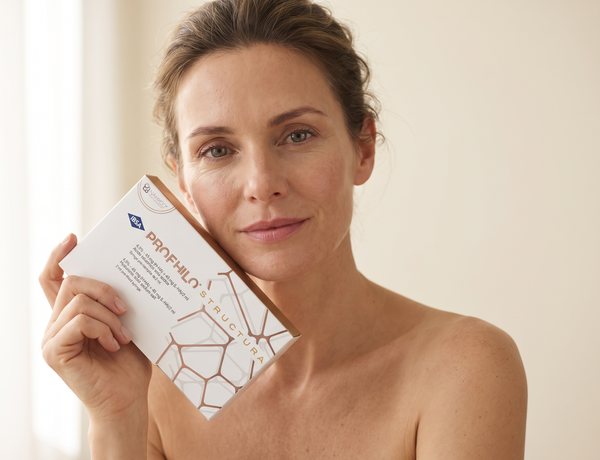
For bioremodelling we use Profhilo, a product containing 32 mg of high-molecular-weight and 32 mg of low-molecular-weight hyaluronic acid in a 2 ml syringe.
Hyaluronic acid with amino acids or peptides
Amino acids support the production of collagen and elastin. We suggest mesotherapy with hyaluronic acid and amino acids for mature skin and skin with the first signs of ageing, especially skin that is dry, sun-damaged or marked by acne scars. The variant with high-molecular-weight hyaluronic acid is intended mainly for people over 40 with more advanced signs of ageing. Around the eyes we use a product with non-cross-linked hyaluronic acid and amino acids, which stimulates the production of collagen and elastin and hydrates the skin.
In deep brightening mesotherapy we use a product that combines non-cross-linked hyaluronic acid with a peptide complex, vitamins, amino acids and minerals. We perform this treatment on dull skin, skin with pigmentation, freckles or sun spots, and skin that is tired and dry.
Products we use in this group include:
- Jalupro, a product in which low-molecular-weight sodium hyaluronate is mixed with four amino acids (glycine, L-proline, L-leucine and L-lysine) before injection;
- Jalupro HMW, a variant with high-molecular-weight sodium hyaluronate and an amino acid solution;
- Sunekos 200 for the eye area, a product with hyaluronic acid and amino acids;
- Aquashine BR for deep brightening mesotherapy, a product with non-cross-linked hyaluronic acid (1.5%), a four-peptide complex, vitamins, amino acids and minerals.
Polynucleotides
Polynucleotides stimulate the skin to produce collagen, elastin and hyaluronic acid, and products containing them do not act as a filler. We perform polynucleotide mesotherapy on the face, neck and décolletage, for concerns that include loss of elasticity, pigmentation and acne scars. We also use polynucleotide products designed for delicate areas, such as the skin around the eyes and mouth and the backs of the hands.
Products we use in this group include:
- Plinest, a gel with polynucleotides for injection into the dermis;
- Pluryal Silk for delicate areas, a product with polynucleotides;
- Pluryal Densify for mature skin and skin with the first signs of ageing, a product with polynucleotides, hyaluronic acid and mannitol.
Collagen
Tropocollagen, the smallest collagen molecule, stimulates the skin to produce new collagen. We perform tropocollagen mesotherapy on the face, neck and décolletage, and around the eyes and mouth. For skin laxity, wrinkles, atrophic scars and stretch marks we use type I atelocollagen, which stimulates the production of the skin’s own collagen and is not a filler. The first results of treatment with atelocollagen appear after 2-3 weeks, and the full results after 2-3 months.
A third option is biostimulation with recombinant human collagen and hyaluronic acid, intended for skin with the first signs of ageing or mature skin, with fine lines and loss of elasticity.
Products we use in this group include:
- Linerase Collagen, a product containing 100 mg of micronised type I collagen per vial;
- Karisma Rh Collagen for biostimulation, a product with a recombinant α1 chain of type I collagen, high-molecular-weight hyaluronic acid and carboxymethyl cellulose.
Needle-free biorevitalisation
An alternative to injections is needle-free biorevitalisation, which we perform with a medical peel containing trichloroacetic acid, hydrogen peroxide and kojic acid. The product is non-ablative, which means that it stimulates the dermis without damaging it. The treatment requires no anaesthesia and no long recovery time. Because it does not make the skin more sensitive to the sun, it can be performed in summer too. We also suggest it to people for whom it will be their first aesthetic medicine treatment.
For needle-free biorevitalisation we use PRX-T33, a product containing trichloroacetic acid at a concentration of 33% and kojic acid at 5%.
How a skin booster differs from a dermal filler and a tissue stimulator
A hyaluronic acid filler restores volume or contours a selected area, for example the cheeks, chin or lips. A skin booster works within the skin itself: it improves its hydration and elasticity, but it does not add volume. A 2023 systematic review noted that hyaluronic acid products with smaller particles and lower density are typically injected into the dermis, where they bind water without adding volume, while denser products with larger particles are placed deeper.
Tissue stimulators, for example polylactic acid stimulators and a calcium hydroxylapatite stimulator, form a separate group. They stimulate the skin to produce its own collagen, and the improvement builds up gradually; with polylactic acid stimulators, a clear improvement in the quality of the skin across the whole face can be seen after a few weeks. We plan these treatments differently from skin boosters: polylactic acid stimulators as 2-3 treatments every 6-8 weeks, and the calcium hydroxylapatite stimulator as a single treatment.
When the face loses its shape because of a loss of subcutaneous fat, for example when it becomes hollow in front of the ear and below the cheekbone, we suggest a treatment that supports the rebuilding of this tissue. We often plan it together with a treatment that improves skin quality. If, on the other hand, the face has lost volume around the cheeks or temples, facial volume restoration is indicated.
Who skin boosters are for
We suggest skin boosters to people who would like to improve the quality of their skin without changing their facial features. Indications include dry and dehydrated skin, fine lines, loss of firmness and elasticity, dull skin, pigmentation and sun damage, and acne scars. We perform the treatments on the face, around the eyes, and on the neck, décolletage and hands.
At the free, no-obligation consultation we assess the skin, choose the product and the treatment plan, and rule out contraindications. If there are no contraindications, the first treatment can often be performed at the first visit.
When skin booster results can be seen and how many treatments are needed
The improvement after skin boosters builds up gradually over the course of treatments. Once the course is complete, the skin of the face is usually better hydrated, more elastic and smoother, and fine lines are less visible. The result depends on facial structure and skin quality, which is why we tailor the plan to each person and discuss the expected outcome at the consultation.
The number of treatments and the intervals between them depend on the product. At Dermapure we plan them as follows:
- We perform needle mesotherapy with hyaluronic acid as a course of 3 treatments every 3-4 weeks.
- We perform mesotherapy with hyaluronic acid of different molecular weights as a course of treatments every 3-4 weeks.
- Biorevitalisation with non-cross-linked hyaluronic acid involves 2-3 treatments a month apart.
- Bioremodelling with hybrid hyaluronic acid complexes involves 1 or 2 treatments 4 weeks apart.
- Mesotherapy with hyaluronic acid and amino acids involves 3-4 treatments every 2-3 weeks, and around the eyes 3-4 treatments every 7-10 days.
- Mesotherapy with high-molecular-weight hyaluronic acid and amino acids involves 3 treatments every 21-30 days.
- Deep brightening mesotherapy involves 1 to 3 treatments every 3 weeks.
- We usually plan polynucleotide treatments as a course of 2-4 treatments every 2-4 weeks, depending on the product.
- Tropocollagen mesotherapy involves 3-6 treatments every 2-3 weeks.
- We inject type I atelocollagen over 2-3 treatments every 4 weeks, and recombinant collagen with hyaluronic acid over 2-3 treatments a month apart.
- Needle-free biorevitalisation involves 1 to 3 treatments every 4 weeks.
The change is gradual, which is why it is best assessed in photographs taken before the first treatment and after the course is complete, in the same light.
What research says about skin boosters
The authors of a 2024 review of injectable skin boosters point out that there are still few controlled studies, especially of multi-ingredient products, and that the materials and treatment protocols need to be standardised.
A 2023 systematic review covered studies of hyaluronic acid injected into the skin of the face. The authors judged the results to be promising: the studies described better hydration, firmness, elasticity and radiance of the skin, particularly with treatments repeated a few weeks apart, and the treatments were well tolerated. However, some of the studies included very few participants, most were not randomised, and the quality of the evidence was rated as low.
A 2025 review of studies on hybrid hyaluronic acid complexes described reduced skin laxity, a smoother skin surface and less severe wrinkles, with improved hydration as the most marked change. The authors noted that the studies were often single-centre, included few participants and did not always have a control group, and that some were funded by manufacturers or had authors with conflicts of interest.
The results quoted apply to the study participants and are not a promise for any individual patient. The authors of the 2024 review stress that only products approved for injection in humans should be used. We work only with certified medical products.
What the treatment involves and whether it hurts
On the day of the treatment we cleanse and disinfect the skin thoroughly. We then inject the product with a fine needle, usually at many small points, or, with hybrid complexes, at a few designated points on the face. How the treatment feels depends on the sensitivity of the skin and the area treated. With most products we use a numbing cream or local anaesthesia, while for needle mesotherapy we discuss any anaesthesia at the consultation. The treatment usually takes 30 to 60 minutes, depending on the product and the area.
The first days after the treatment and aftercare
After the injections the skin may be red, and small bumps or minor bruises, which usually subside within a few days, may appear at the injection points. We recommend not wearing make-up for 24 hours after the treatment and avoiding strenuous exercise, the sun and sunbeds for a few days. We provide detailed aftercare advice for the specific product after the treatment.
Aftercare is available 7 days a week. Should you have any questions after the treatment, we are available on 576 079 976, including at weekends.
When the treatment is not advisable and what the contraindications are
A skin booster is not the right choice when the main concern is loss of volume, marked sagging of the tissues or deep folds. In such cases we suggest another option or advise against the treatment.
Among other things, we do not perform these treatments during pregnancy or breastfeeding, in the presence of an active infection or inflammation of the skin in the treated area, for example cold sores, or when there is an allergy to the ingredients of the product. Cancer, autoimmune diseases, a tendency to form hypertrophic scars or keloids, blood clotting disorders, taking anticoagulants (blood thinners) and diabetes are discussed before any decision about the treatment is made, because they are contraindications for some products. The full list of contraindications depends on the product, which is why we go through it at the consultation.
Photos of the results of hyaluronic acid filler treatments performed at Dermapure are in our gallery, in the sections “Full Face: facial contouring” and “Tear trough filler”.
We see patients at our clinic at Grzybowska 3/U7, Warsaw (Śródmieście, 1st floor). We have more than 10 years of experience, have looked after nearly 12,000 patients and have performed over 50,000 treatments. You can book a free, no-obligation consultation through Booksy or by phone: 576 079 976.
Frequently asked questions
Is a skin booster a filler?
No. A skin booster improves the hydration and elasticity of the skin, but it does not restore lost volume or change facial features. When volume needs to be restored, we suggest filler treatments, chosen after assessing the face. The result depends on facial structure and skin quality.
Can a skin booster be used under the eyes?
Yes. The skin under the eyes is thinner and more delicate, so we choose the product and the injection technique at the consultation. Treatments we perform in this area include under-eye mesotherapy, mesotherapy with hyaluronic acid and amino acids, and tropocollagen mesotherapy, as well as polynucleotide treatments.
How many skin booster treatments are needed?
It depends on the product: a course usually involves 1 to 6 treatments, performed at intervals ranging from 7-10 days to a month. We decide on the number of treatments and the intervals between them at the consultation, after assessing the skin.
Does a skincare booster work in the same way as the treatment?
No. Skincare products called boosters are usually concentrated serums that are applied to the skin and act in its surface layers. In aesthetic medicine, a skin booster is a product given through a series of tiny injections directly into the skin.
This article is for information only and does not replace a consultation with a specialist.
Sources
- Review of current knowledge on injectable skin boosters for rejuvenating ageing skin, 2024, Archives of Plastic Surgery
- Systematic review of studies on injectable hyaluronic acid for improving facial skin quality, 2023, Clinical, Cosmetic and Investigational Dermatology
- Review of studies on hybrid complexes of low and high molecular weight hyaluronic acid in aesthetic medicine, 2025, Pharmaceuticals
- Dermapure: needle mesotherapy for the face, neck and décolletage
- Dermapure: skin bioremodelling with hybrid hyaluronic acid complexes
- Dermapure: treatment price list and free consultation