



































Adding retinol to your daily skincare can give very good results, but it calls for common sense and a plan. How do you do it safely, so that you benefit from its rejuvenating and regenerating effects while keeping irritation to a minimum? What matters most is introducing it slowly, choosing the right product and looking after your skin barrier. Start with low concentrations, use it sparingly and always apply sunscreen. That way, retinol will help you achieve a smooth, healthy complexion.
What is retinol and what results can beginners expect?
Retinol is an active derivative of vitamin A from the retinoid group. In cosmetology it is known as the “vitamin of youth” and is one of the most thoroughly researched skincare ingredients. What sets it apart is that it reaches the deeper layers of the skin and influences how skin cells work. That is where it triggers repair processes that improve the look of the complexion.
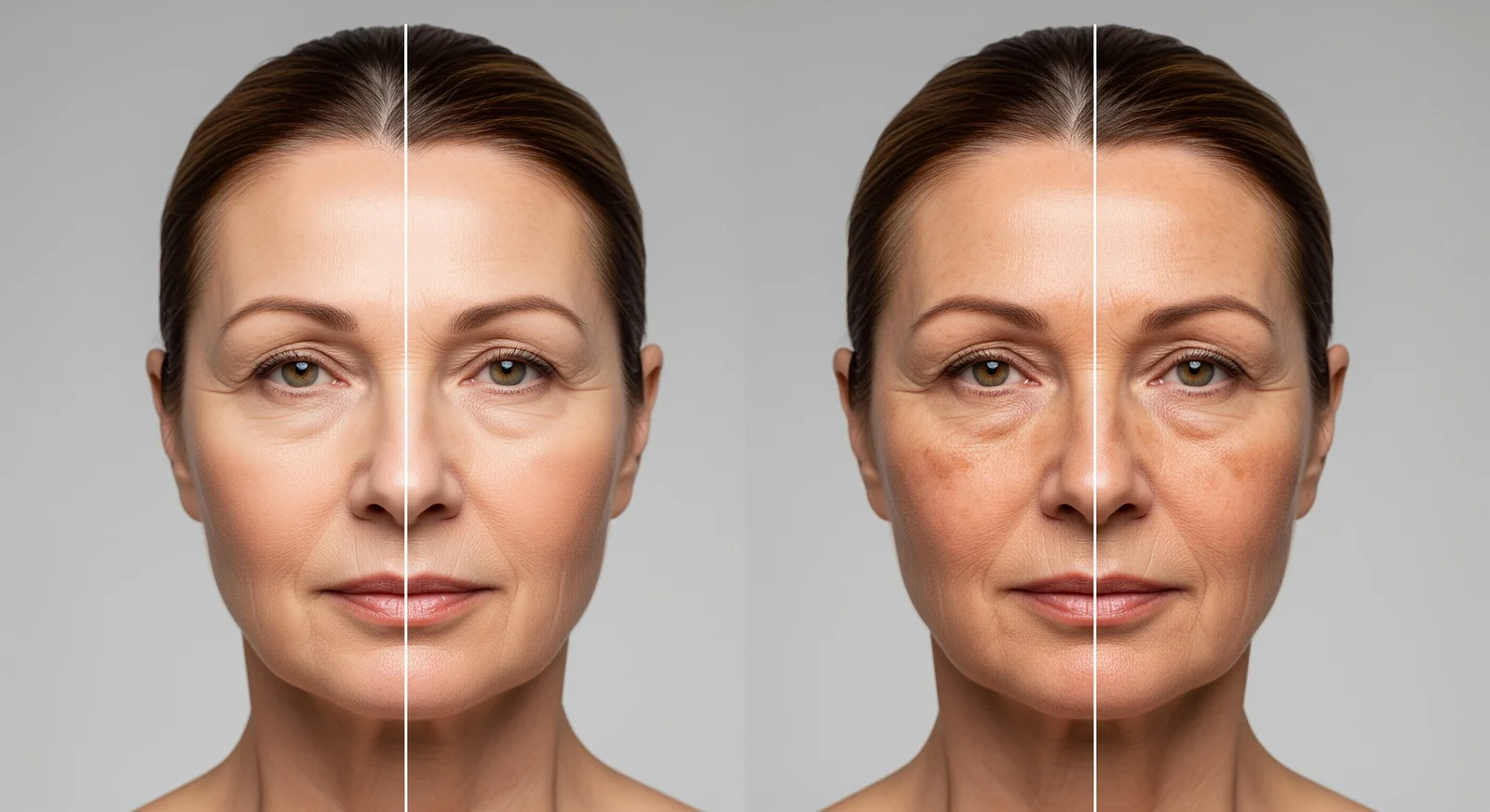
Retinol works in many ways. It stimulates the production of collagen and elastin, the proteins responsible for firmness and elasticity. Their levels fall with age, and the sun and smog speed up this process. Retinol activates fibroblasts, and over time this smooths wrinkles and improves skin density. It also speeds up the renewal of the epidermis, helps remove dead cells and reveals fresh, brighter skin. The complexion becomes smoother and more even.
How does retinol work on the skin?
Retinol works in several steps. Once applied to the skin, it is converted first into retinal and then into retinoic acid, which is the form that binds to RAR or RXR receptors in skin cells.
The activated receptors influence how cells divide and mature. In practice, the skin renews itself faster and sheds dead cells more easily, with new cells taking their place. Retinol also boosts collagen and elastin production, limits excessive keratinisation and helps reduce the number of blackheads. It inhibits melanin production, so it fades pigmentation and evens out skin tone. With regular use, the complexion becomes smoother, more resilient and radiant.
What benefits can retinol bring to the skin?
Retinol is a versatile ingredient. With regular use, it:
- smooths fine lines and wrinkles,
- fades pigmentation and evens out skin tone,
- reduces blackheads and breakouts and regulates sebum,
- strengthens the skin so that it copes better with external factors.
It works well for mature, combination and oily skin, and at low concentrations also for sensitive skin and skin prone to broken capillaries. In younger people, it can also work preventively.
What are the most common side effects and initial reactions?
Your skin needs time to get used to retinol. At the start, you may notice temporary symptoms:
- redness, dryness, peeling,
- a burning sensation or itching,
- a temporary breakout of small blemishes.

This usually passes after a few weeks. In the meantime, focus on hydration and introduce the product gradually. If the reactions are strong or last a long time, talk to a dermatologist.
Beginners’ most common questions about retinol
Lots of questions come up at the beginning, and that is normal. Understanding how retinol works and what its limitations are makes it easier to introduce it safely into your routine and achieve good results.
People often ask about skin type, the time of year and the right age to start. These questions matter, because retinol is a potent ingredient and using it the wrong way can cause irritation. Here are answers to clear up your doubts.
Can retinol be used in summer?
Yes, but with great care. Retinol increases sensitivity to UV, which makes irritation and pigmentation more likely. That is why, in the past, it was used more often in autumn and winter.
Today, thanks to good sunscreens, you can keep using it in summer too, provided that you:
- apply SPF 50+ every day and reapply it during the day,
- avoid long periods in the sun and wear a hat,
- apply retinol only in the evening.
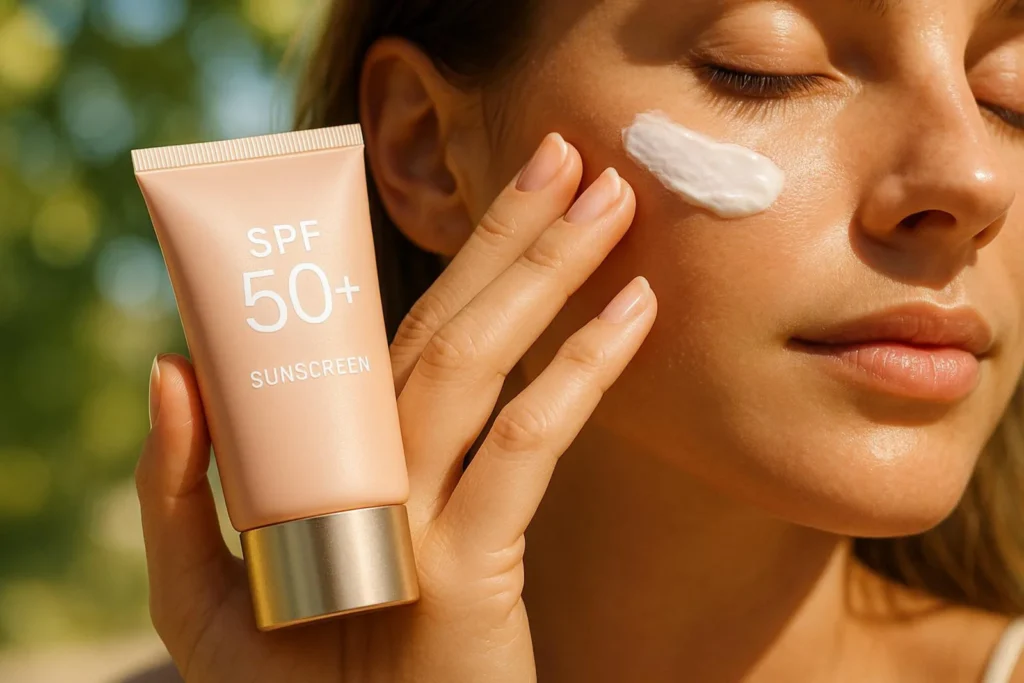
If you are just starting out, it is better to wait for the cooler months to reduce the risk of irritation. Also remember that UV weakens retinol, so use it in the evening.
Is retinol suitable for sensitive skin?
It can work well if you start with low concentrations and gentle forms. Look for:
- retinol at 0.1-0.3% (often well tolerated),
- retinal (retinaldehyde),
- esters, e.g. retinyl palmitate (the gentlest, but the weakest).
Choose creams or emulsions with added soothing and moisturising ingredients: hyaluronic acid, niacinamide, panthenol, ceramides. Start with 1 application a week and increase the frequency carefully.
At what age is it worth adding retinol to your skincare?
It is most often recommended to start after the age of 25, when collagen production declines and the first fine lines appear. If you have acne, you can start earlier, after consulting a dermatologist. Always start with low concentrations.
Who is retinol not recommended for?
There are situations in which retinol is not a good choice. Knowing the contraindications is the basis of safe skincare.
If you have any doubts, consult a specialist. This will help you avoid problems and choose the right solutions.
What are the contraindications to using retinoids?
Take particular care if:
- you are hypersensitive to vitamin A or to the ingredients of the product (itching, severe redness, burning): stop using it,
- you take vitamin A supplements: discuss the treatment with a specialist,
- your skin is damaged by burns, wounds or severe irritation: wait until it has healed,
- you have atopic dermatitis (eczema), psoriasis, rosacea or cystic acne: discuss your plan with a dermatologist,
- you use medicines or dermatological products that may interact with it: this needs a specialist’s opinion.
Can pregnant or breastfeeding women use retinol?
No. Do not use retinol or other retinoids during pregnancy or while breastfeeding. Too much vitamin A can harm the developing baby. This also applies to vitamin A supplements. Choose safe alternatives during this time.
How do you choose your first retinol product?
At the beginning, it is easy to get lost among the different forms and concentrations. A good decision at the start means less irritation and better results. Follow the “less is more” rule and choose gentle formulas. Your skin needs time to adjust.
What matters is not only the concentration, but also the type of retinoid and a formula that supports the skin barrier. This helps the first months go more smoothly.
Which forms of retinoid are most suitable for beginners?
Retinol or retinal are most often recommended, and for very sensitive skin, retinyl esters. A comparison:
| Form | Strength/speed of action | Tolerability | Who it suits |
| Retinol | Medium (requires 2 conversions) | Good | A classic starting point |
| Retinal (retinaldehyde) | Faster (1 conversion) | Often very good | Sensitive skin, if you want faster results |
| Esters (e.g. retinyl palmitate) | The weakest | The gentlest | Very sensitive skin, a cautious start |
What concentration of retinol is safe to start with?
- Start: 0.1-0.3% retinol,
- after your skin adapts: up to 0.5%,
- 1% and above: for people whose skin is well accustomed to it.
Too high a concentration at the start means a higher risk of irritation. It is better to go slowly and gradually increase the frequency or strength.
Tried-and-tested retinol products for beginners
To start, choose gentle formulas with added soothing ingredients. Good practice means a low concentration, a stable form and packaging that limits exposure to light and air.
Remember: skin reacts in different ways, so it is important to watch how yours responds. Here are some examples and tips to help you choose.
What should you look for when choosing your first product?
- A low concentration (approx. 0.1-0.3%).
- Form: retinol, retinal or retinyl esters.
- Product type: a cream or emulsion with plenty of soothing ingredients.
- Avoid at the start: alcohol high on the ingredient list, strong fragrances, irritating additives.
- Packaging: airtight and opaque (retinoids are sensitive to light and air).
- A reputable manufacturer and stable formulas.
How do you start using retinol safely?
You need patience, consistency and a simple plan. Do not start retinol unprepared. Watch your skin and respond to its signals.
Do not rush to increase the concentration or frequency. Preparation, the way you apply it and a gradual build-up are the foundation.
How do you prepare your skin for its first contact with retinol?
- For 2-3 weeks, focus on regenerating the barrier: ceramides, hyaluronic acid, panthenol, squalane.
- During this time, stop using strong acids (AHA/BHA), high concentrations of vitamin C and physical scrubs.
- Avoid alcohol-based toners and anything that dries the skin.
- Your skin should be hydrated, calm and free from fresh irritation.
How often should you apply retinol at the start, and how do you increase the frequency?
Introduce it in small steps. A sample plan:
| Period | Frequency | Notes |
| Weeks 1-2 | 1-2 times a week | Gaps of at least 3-4 days |
| Weeks 3-6 | every 2-3 days | Watch for reactions |
| After your skin adapts | every 1-2 days or daily | If there is no irritation |
If you notice burning, severe redness or peeling, reduce the frequency or take a break.
What is the correct way to apply retinol to the face?
- In the evening, wash your face with a gentle cleanser and dry it thoroughly. Wait a few minutes.
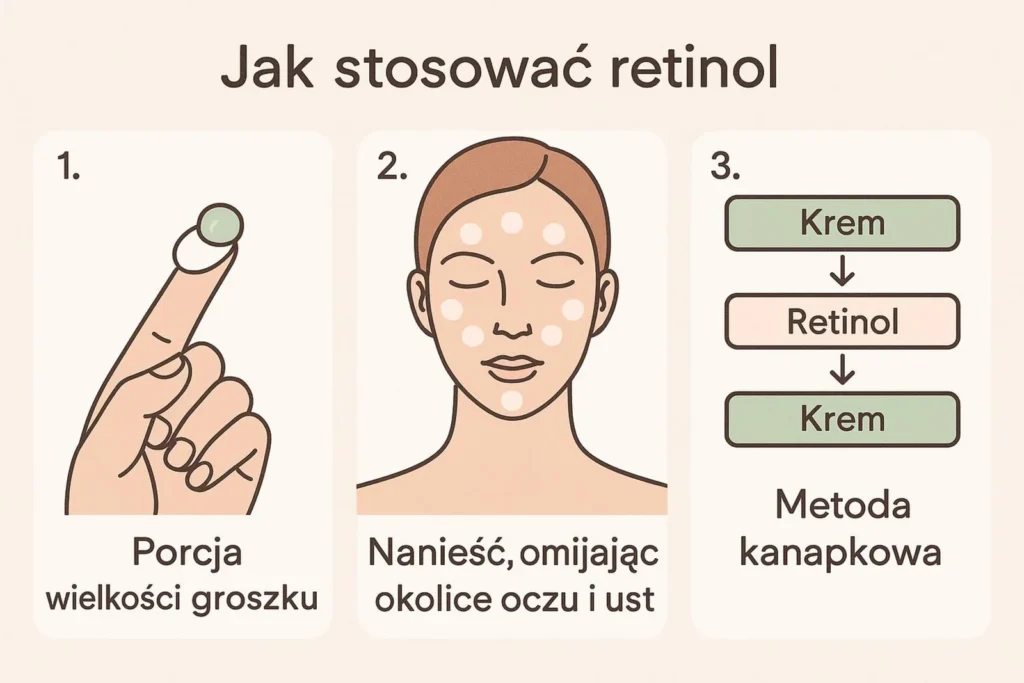
- Apply a pea-sized amount to the whole face, avoiding the eye and mouth area (unless the product is designed for these areas).
- After 15-30 minutes, apply a moisturiser.
- For sensitive skin, use the “sandwich” method: cream, retinol, cream.
What can you combine with retinol, and what should you avoid?
Some ingredients support retinol’s action and ease discomfort, while others increase the risk of irritation. It is worth putting together a simple routine that works with your skin.
A good plan often means splitting active ingredients between different times of day.
Which products and ingredients support its action and soothe irritation?
- Hyaluronic acid: intense hydration.
- Niacinamide: strengthens the barrier, reduces redness, regulates sebum.
- Ceramides: rebuild the lipid layer.
- Panthenol: soothes and speeds up healing.
- Squalane, gentle oils: limit water loss.
- Peptides, coenzyme Q10: support regeneration and antioxidant protection.
- Aloe vera, calendula: extra soothing.
Use them in the morning, or in the evening once the retinol has absorbed.
Which ingredients can cause additional irritation when combined with retinol?
- Strong AHA/BHA acids (e.g. glycolic, salicylic) in the same routine.
- Vitamin C in the form of L-ascorbic acid: it is better to use it in the morning and retinol in the evening.
- Products with alcohol, strong fragrances or harsh detergents.
- Different retinoids used at the same time (e.g. tretinoin, adapalene).
- Physical scrubs: limit them or stop using them during treatment.
How can you protect and support your skin while using retinol?
Retinol is intensive skincare. Your skin needs more hydration, soothing and protection. This helps it cope better with the treatment and recover faster.
Build simple habits: gentle cleansing, rich hydration, regular sunscreen and careful observation of how your skin reacts.
Why are hydration and rebuilding the hydrolipid barrier so important?
Retinol speeds up skin renewal, which at first can weaken the skin’s natural barrier and increase water loss. The result is dryness, tightness and peeling. Products with ceramides, cholesterol, fatty acids, hyaluronic acid, panthenol and squalane help. With them, the skin loses less water, is calmer and tolerates retinol better.
Which skincare habits minimise the risk of irritation?
- Gentle cleansing: cleansing milks, oils and emulsions without soap or harsh detergents.
- Lukewarm water instead of hot.
- Apply retinol to dry skin.
- In the morning, focus on hydration and rebuilding the barrier.
- Do not combine it in the same routine with AHA/BHA acids or strong vitamin C.
- The “sandwich” method if your skin is prone to irritation.
- Do not touch your face during the day with unwashed hands.
This approach gives your skin the right conditions throughout the treatment.
Why is regular use of sunscreen essential?
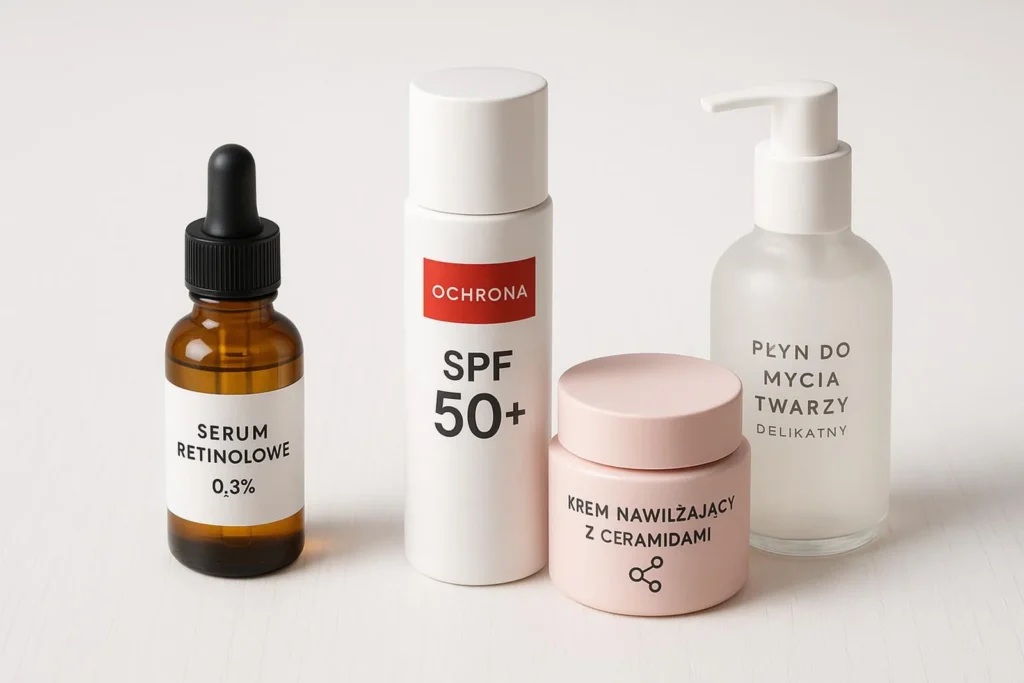
When you use retinol, SPF 50+ sunscreen is a daily must. Without protection, sunburn, pigmentation and faster skin ageing are more likely. UV also weakens the action of retinol itself.
- Use SPF 50+ every day, whatever the weather.
- Reapply sunscreen every 2-3 hours, and more often after swimming or sweating.
- Remember your neck, ears, hands and lips (an SPF lip balm).
- Wear sunglasses and a hat.
How can you tell your skin is adapting, and when can you expect the first results?
Retinol works over a longer period. Your skin has to get used to it, and you need to watch how it reacts. This helps you stay motivated and avoid changing your routine too quickly.
The more regularly you use retinol, the better the results you will notice from month to month.
How long does it take to adapt to retinol?
Usually anywhere from a few weeks to a few months. In the first 2-4 weeks, dryness, redness or peeling may be more noticeable. Over time, the skin settles down and tolerates the product better. If the symptoms are still strong after 6-8 weeks, consult a dermatologist: the concentration may be too high or the formula may not suit you.
How long before you see visible changes in your skin?
The first subtle changes (smoother texture, brighter skin tone) are often visible after 6-8 weeks. Bigger results, such as softer wrinkles, improved firmness and reduced pigmentation and blemishes, usually take 3-6 months of regular use. Long-term consistency brings the most noticeable results.
What should you do if irritation or dryness appears?
- Reduce the frequency (e.g. from every 2 days to once every 3-4 days) or take a short break.
- Boost hydration: creams and serums with hyaluronic acid, ceramides, panthenol, niacinamide, aloe vera.
- Introduce the “sandwich” method.
- During this time, do not combine it in the same routine with AHA/BHA acids or strong vitamin C.
- If the symptoms are strong or do not go away, contact a dermatologist.
Summary: introducing retinol safely
Retinol can clearly improve the look of your skin: it can smooth wrinkles, fade pigmentation and reduce blemishes. However, it takes a sensible plan and consistency.
Start with low concentrations and infrequent application, then gradually increase the frequency. Use a high SPF every day. Build up your skin barrier with hydrating and soothing ingredients. Do not combine retinol with irritating actives in the same routine. Watch your skin and adjust the plan when needed. If problems arise, seek advice from a specialist. A calm, step-by-step approach helps you achieve a smooth, resilient and radiant complexion.